Friday, December 3, 2010

Salar de Uyuni - trip of a lifetime?

We´ve been seeing and experiencing all kinds of amazing landscapes on this trip. One we were intrigued to explore was Salar de Uyuni. So we took the only viable option: a 3 day, 2 night 4x4 trip plus an overnight bus there and back from La Paz, making for 4 nights in total. The Salar is a bleak desert that is not reasonably accessible any other way.

If you think about this trip, here are some things you might consider:
Our fine travel companions from Norway at Laguna Verde.

All 4x4 share a similar route along a bit of infrastructure.
  1. 8 to 10 hours on the bus from La Paz to Uyuni one way. More than half this time is on unpaved roads.  Basically, you gotta be OK with a rough ride. The bus drivers seemed very confident in their skill and vehicles: they motored through anything at roughly the same speed. Note: There is a train that is more comfortable.
  2. Do you want Salar de Uyuni only? There is a one day 4x4 excursion you can take, instead of the 3 days. The 3 day trip has 1 day on the Salar and then heads into the mountains to explore lagunas, flamingos and volcanic landscapes.
  3. If you go for the 1 day only, then you likely will spend a night or two in Uyuni. Uyuni is rustic, but then again, if you visit the countryside in Bolivia rustic is your thing, right!?
  4. Your 4x4 will break down. It´s best to be confident in your driver´s ability to handle such breakdowns. Ours changed tires 2x and then handled the running out of gas situation. Our travel companions were pretty relaxed about this sort of thing, but depending on the tourist´s expectations and driver´s competence that could be really stressful. After all, you are in what you might think of as the "middle of absolutely nowhere" - which is why you came here (but that can be easily forgotten, when things get rough).
  5. If the itinerary changes, is that always bad? Well, in our case it was good. The place we stayed at the first night was awesome and brand new. But really, we were supposed to be in a whole different town about 2 hours away that night. Again, the driver (a competent 21-year-old), made it so and it worked out very fine.
  6. Chances are you will get sick ... OK: in our sample of 6 people, 2 got very sick (major gastro) and 2 had some lesser gastro trouble and 2 stayed healthy. Again, if Bolivia is your thing, you will be prepared to deal with such sickness, but from what I observed a landcruiser with a driver and cook and 6 tourists is a pretty tight spot to feel sick. 
  7. You are booking 3 days in a 4x4. The only stops are for taking pictures, 10 or 20 minutes at a time. Lunch is longer, of course. It´s a ton of landcruiser time. Make sure you are ready for that mentally and physically. Note: the people in the back row are in a tight spot, with no leg room to speak of. So, if your group has large or tall people in it, be aware of the potential for discomfort on that count, too (At least, most people I saw taking this trip were pretty fit looking, adventure type travellers.)
  8. You will get up early, one day it was 4:30 am to leave at 5, so we could make it back to Uyuni by about 6 pm. A long day of driving for everyone. One reason for this is to make the transfer to San Pedro de Atacama in Chile for the border-crossers. Pretty surreal to see the seeming randomness of 4x4s and busses meeting in the high sierra at 10 am or so to exchange people.
  9. You will be hot, you will be cold. The desert dust could get a bit much; actually that´s why windows get rolled up and no air conditioning is used ... which is why you will get hot.
  10. While the Salar is at about 3,600 m, the high point of the 3 day trip is actually at 4,800 m. You´ll spend 2 days between about 4,200 and 4,800 m. Even if you are well acclimatized this can be a challenge due to the extreme aridity here. 4,500 m in Peru´s Cordillera Blanca felt way easier than 4,500 m in this place! So, drink even more water than usual on this trip to at least try to stay hydrated. Of course, this is really hard to do when you are the one with the gastro issues...
Volcanic rock formations are cool ...

And we did see quite a few of them.

Geysers are interesting, even at 6 am.
The $64,000 question is whether given the lived experience of the 3 days, 4 nights would we do this one all over?

My thought is probably not. But then again, I am not sure we would have gone all that way for just a day trip either. And I am happy to have seen these landscapes, especially the Salar.

I wish they could develop the area for hiking. It´d be stunning. However, given the harsh and high mountain environment that seems like a very long shot. In part because there seemed to be very few natural water sources left in the area (really, it is bone dry!), so that human habitation is very sparse and only exists on the edges of the Salar.

26 hours in transit ...

Jan and I have just arrived in Punta Arenas in the Chilean part of Patagonia.

We flew from Cusco to Lima, from Lima to Santiago via Antofagasta, from Santiago to Punta Arenas via Puerto Montt. Not exactly a short routing, but we made it safe (and nearly sound - those colds suck) to the most southern city in the world. (Ushuaia is apparently just a "town", so it claims to be "the most southern town in the world" - still the "most southern post office" goes to Puerto Williams across the Beagle Channel ... in any case this is the end of the world as we know it.)
.
Now, we will relax a little, post some stuff from the last week or so, go see some penguins and hopefuly find really tasty food. Jan´s been having some trouble as vegetarianism isn´t so common in Bolivia and Peru. The typical dishes overflow with meat of various sorts - which is perfectly fine with me :)

We spent the night at Santiago´s international airport. Amazingly, while Wi-Fi is everywhere there was no place for internet access via a rented computer! And you couldn´t get your nails done either. But 3 sunglass-stores were open all night. Go figure.

We played cards, drank beer (Inga) and wine (Jan), and watched Santa´s elves who were busy decorating this huge Christmas tree. The airport stays open all night, which was convenient given the layover from 2:30 am to 9:45 am.

Thursday, December 2, 2010

More Salar de Uyuni impressions :)

Some of our loyal readers have been wanting more pics of us. Well, here are a few - mostly of Jan since Iamposting this -  from the Salar trip last week.


Jan and our shadow friends from
Norway at Laguna Colorada. Yes,
it´s red.

Some of the funky views we smiled
about.The foreground is the Salt flats.
 

OK. That´s actually Johnny, our driver
through Salar and Lagunas. Relaxing
and having some fun on the Pampa
Colorada as we await help and gas.We broke down about 25 minutes
from Uyuni, our end point.


Flamingos proved inspirational :)


Ah, Jan likes these pink flamingos a lot.

Tuesday, November 30, 2010

Machu Picchu - veni, vidi, vici

Oh, right, that´s Ceasar of Rome!

Anyhow, the Inkan architecture, astronomy, engineering, culture and religion seems to have been grand, indeed. Pachamama (mother earth) ruled. And even if the empire only lasted a short while, our guide did say that some people think that they continue to live in the unexplored jungle of Peru stil. Awaiting the return of the last Inka.

Our guide was very good. His telling of  the well-rehearsed 2-hour long story of Machu Picchu felt as fresh as ever. The fog did lift a little by mid-day and we did get some nice pics along with the knowledge :) We´ll add some when we get back to Cusco later on - this connection is too slow :(

Monday, November 29, 2010

The place in between ...

... is called Aguas Calientes.

Yes, we are in that tiny tourist haven where the train from Cuzco to Machu Picchu ends. Haven because it has all a typical tourist could possibly want - really: tons of local, artisan stuff to buy, plenty of hotels and hostels in all price ranges, many restaurants and bars all with people outside welcoming you vigorously to have a drink or reciting the menu highlights (guinea pig anyone?), oh and if you want a massage - there are 6 different ones on offer here, too.

All that to say, it´s not our usual sort of destination on this journey, but it suits our purpose: to visit Machu Picchu and not be rushed into the 5-hour window the day trip allows. As well, there are the thermal hotsprings which lend Aguas Calientes its name. As Jan can attest to, rightfully so.

We´ll meet our guide, Washington, tonight for a briefing about tomorrow´s visit. I am afraid it´ll be another very early morning. But if it is like all the other early mornings, it´ll be worth the wake-up call.

We´ve decided to go directly to Patagonia from this part of our journey. The careful reader will note that we have decided to leave Arequipa/Colca Canyon and the Chilean Atacama desert to our next south american adventure. 3 months is turning out to be kind of short ...

Saturday, November 27, 2010

Rare signs of life in the deserts

We got to see more animals that we hadn´t seen live before. So here they are for your enjoyment!
Check out the video Jan took at the bottom of this post.

Laguna Colorada. The rare James Flamingos live here
off the pink and red algae. You are what you eat!


Fly away ... OK, so this one landed like
50 m away - same laguna, same food.


So many flamingos - and one other
bird in the foreground (click to
enlarge, as always!


Flamingo in flight with perfect reflection.
(Yeah - Inga got this one. Finally a bird in flight up close!)


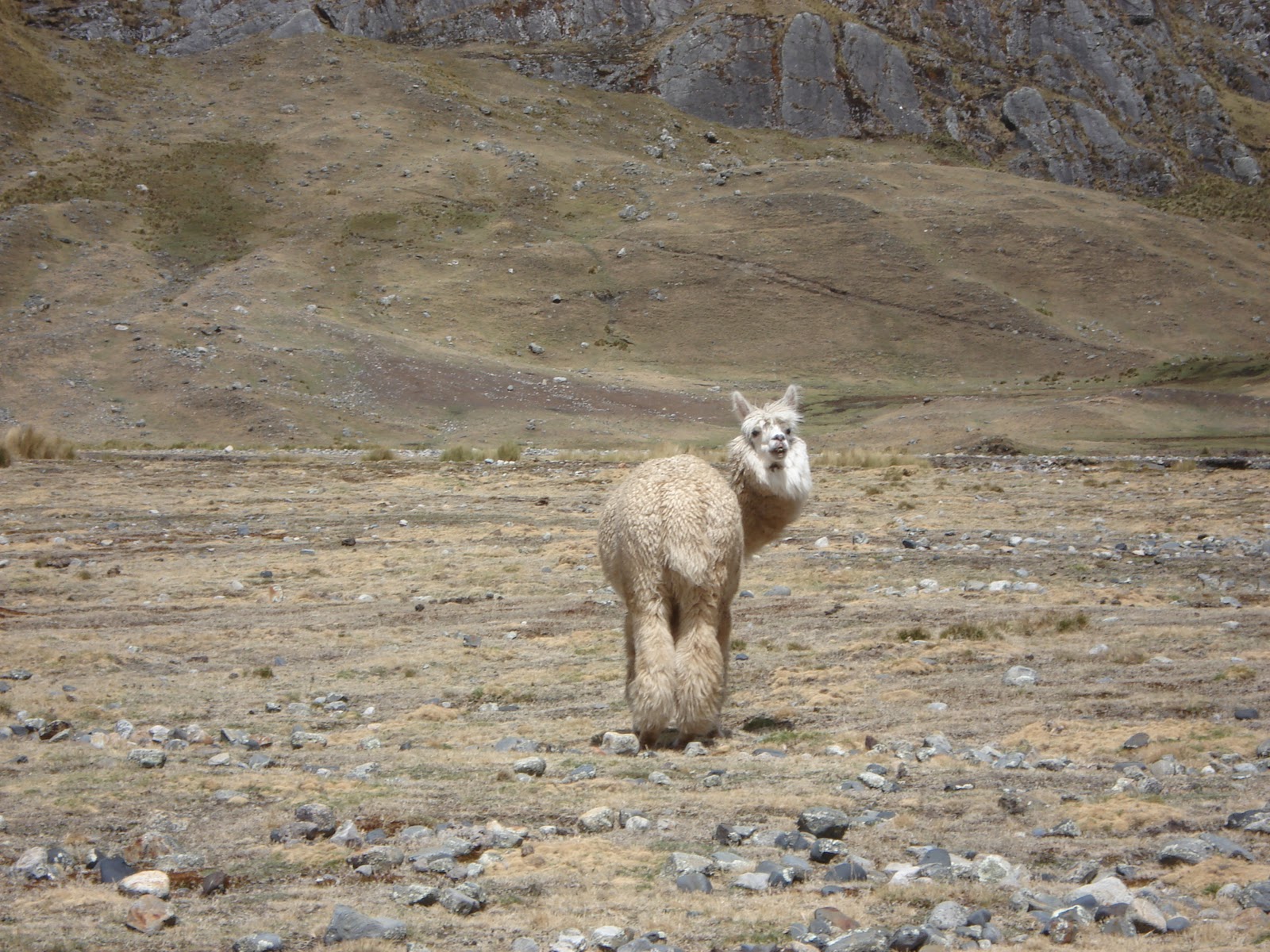
Vicuña! Wikipedia says they are a 
relative of the llama, and is believed to be
the wild ancestor of domesticated
alpacas. They seem to live on
nothing in this harsh environment.
Maybe they eat dirt?!


One of the 80 or so bird species living
at well above 4,000 m in the
Andes of Bolivia.


Uyuni: A world far away

So close, yet so far. At the end of the
three day journey, we ran out of gas
25 minutes from Uyuni. There
are absolutely no gas stations, so you
have to travel with your own supply.
The Salar de Uyuni and south-western Bolivia were landscapes that we had planned on experiencing. And experience we did! After a 12 hour overnight bus ride like no other, we arrived in Uyuni ready for a three day tour in a 4x4.

Just as we stopped vibrating from the bus ride (seriously, words cannot describe just how much we rattled and rolled on the kilometres of unpaved roads), we jumped into the 4x4 along with Johnny, the driver, Anna from Germany, three adventurous gals from Norway, Cathrine, Rut and Tonje, and our cook Clementina. We then started our (long) road trip (between the bus to Uyuni, the tour of the area and the bus back to La Paz, we clocked 46 hours in vehicles) that brought us to some magnificent natural sights and over barren landscapes and kilometres and kilometres of absolutely nothing but space and more space.
Jan and Inga doing the Salar jump. This is a 12,000 square km
salt flat in south-western Bolivia. Easily visible from space
due to its super bright whiteness.
Anyhow, it´s actually hard to get  the shot in the air ...
 we´ll leave the analysis of styles to you.
Yup. Just salt. Dry and hard.
And endless.


One, two, three, jump.  Our friends Rut, Tonje and Cathrine
doing it with style. (Yes, Jan did get this one perfectly!)

View from Isla Pescada
across Salar de Uyuni.
These cacti grow 1 m per
100 years, and some are
9 m tall! Quite something
to see something living that
is 900 years old!


Isla Pescada is covered with these giant beauties.
Cacti in bloom. Pretty awesome to see.


When surreal meets
surreal - Jan takes a pic.

First night accommodations in
Santiago de Agencha. Brand new
"tourist complex" complete with salt
floors, salt blocks for bed frames, and
electricity from 7 to 10 pm.

Our abode for the night. Architecture
is inspired by a local peoples´ housing.


Jan likes rocks. She can climb them!
This is one of many volcanic formations
in the region.

Jan also likes yoga - especially after
4 hrs in the 4x4 going cross country.


And now playing with the wind at
Laguna Colorada. The red is due to
algae and the white is borax.


Things we don´t blog about

(Click on images to enlarge)
Important instructions - not to be taken lightly.
 It´s true. We are having awesome experiences, getting to know out there places beyond civilization and meeting interesting people along the way, too.

But really, do we tell all? No! Of course not!

So for the fun of it here´s a list of things we don´t blog about:
  1. The specifics of various bathrooms we encounter
  2. The physical requirements of bathroom use (depending on number 1 above).
  3. How long it takes to break the habit of flushing toilet paper, even though the systems here can´t handle it.
  4. And if you throw it in, under what circumstances do you try to remedy the error.
  5. Asking your hiking guide to buy feminine hygiene products.
  6. The awkwardness of getting  the conjugation of Spanish verbs in both tense and person wrong.
  7. Trying to eat the entire Pique de lo Macho plate even though it would feed a family of 4 - or 6! - and what happens afterwards.
  8.  
    Bolivian national dish. Pique do lo
    macho is basically protein. Tons of protein
    and a little bit of potato starch.
    
  9. Generally, the bodily functions that follow food one is not used to eating.
  10. Undertaking secret calculations of how much pasta it takes to become seriously allergic to it.
  11. The discovery of the intrinsic connection between panty-liners and panties.
Well, there.

Sunday, November 21, 2010

Farm animals in Peru and Bolivia

Yin and yang finding out about
life together. Lamb is a staple meat
and we saw many flocks along
our travels.
Livestock farming in the Andean regions of Peru and Bolivia is very different from what I am familiar with in Canada. The biggest difference is in how the animals are raised. Communities or families have herds of llamas, alpacas, cows and sheep that graze freely in the mountains (no fences in these parts). The animals are rounded up once a week or so by the herder to make sure that they remain in the right valley and to guard against poaching (the value of animals being what it is, they are unfortunately stolen). All of the animals are branded for easy identification, but alas, this does not protect against thievery.

During our trek through the Cordillera Blanca in Peru, we encountered farm animals in every valley. In the Cordillera Real in Bolivia, communities are deliniated by valleys and are often separated by glacial rivers. Trekking through the vast lands and up and over passes is just part of what a "campesito" does. It was quite inspiring (and humbling too), to witness the physical strength and determination of the people.

Horses are a big part of life in the
Andes. They are essential
for transportation and as pack
animals. Here they helped us
across a river.
Donkeys are also integral to life in the Andes. They can
carry up to 40 kilos (25 more than llamas). Such gentle
animals they are.

Alpacas make you just want to smother yourself in
their fur. The white ones are more "valuable" than
the lovely brown ones. Alpacas are raised for their
fabulous fur which is used to make many garments,
from hats and gloves to gorgeous sweaters. Warmth
and beauty combined.

Alpacas graze freely on grasses.
There are several varieties of llamas. One variety is best for its meat (they
have less fur so are valuable for the food they provide), while another
variety has more fur, making them valuable for their fur "harvest". Their fur
can be shorn twice a year. Both varieties can give birth to one llamasita
a year. Llamas are gentle creatures and a spectacle to watch as they
effortlessly bounce up and down steep faces. 

Casa Hermanos Manchego -- our fine casita in La Paz

Matte de coca is as common
as Tetley, but a whole bunch
 better in taste and in
medicinal properties (gives you
energy; good for stomach
aches; etc.)
Good morning! Inga prepping
breakfast in our very own dinning
room. How regal.
Trying to find just "the right spot" to call home involves a whole bunch of online research and, in the end, a gut feeling. Our home away from home in La Paz is pure perfection -- it is a fine home (i.e. very unlike a hotel) with a great vibe, fine people, great location (Sopocachi neighbourhood) and interesting history.
 

This fine piece of stained glass is in the sitting room
at the front of the house. It is only one of the many
pieces of stained glass to adorn the house.


Inga in the front garden. A very
welcoming entrance.

View into the sitting room from the
dining room.